Bearded Dragon
Pogona vitticeps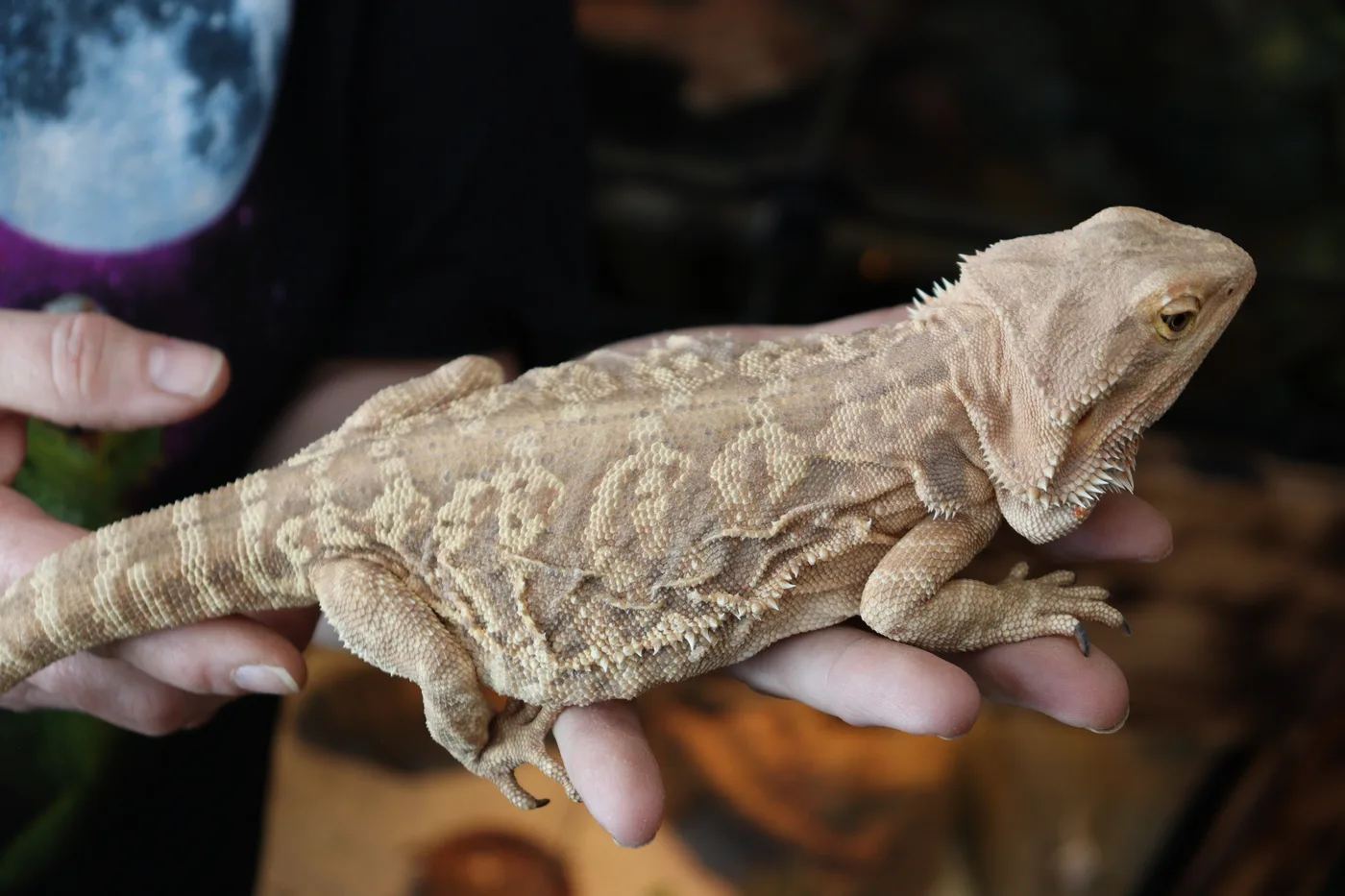
Housing
Bearded dragons are desert reptiles and typically live in a hot dry environment. In order to keep them happy you should try to mimic their natural environment. Baby - 20g 10 - 16" - 40g or larger 16 - 20" - 50g minimum 20" - 75g minimum You will want to give them UVA/UVB Fluorescent lighting for 12-14 hours a day
Temperature
No cooler than 85F and no warmer than 110F. They will need a basking light for 10+ hours a day.
Humidity
Typically between 30 and 40% as sthey come from dry environments naturally.
Feeding
Bearded dragons are omnivores which means they'll eat insects and vegetables. You will need to dust their insects with calcium and other vitamins to ensure they do not succumb to metabolic bone disease. They can eat an assortment of insects from crickets to butterworms and black soldier fly larvae. Calcium and vitamin D3 are two of the most important vitamins and minerals for your bearded dragon to have and should be dosed daily for babies or weekly for adults.
Handling
Bearded dragons are great for handling and gentle handling is important for building a positive relationship with your pet. When well socialized they can be enjoyable for all ages to handle.
Shedding
Bearded dragons will shed less as they get older and will only shed a few times per year after they become one year old.
Colours & Morphs
There are 11 different morphs of bearded dragons ranging from leatherback and silkback to giant.
Additional Notes
Bearded dragons will enter brumation in the fall or early winter which is essentially hibernation for reptiles. This can last from a week to a few months. Though standard is the most common
Care Requirements
Difficulty
Beginner
Venomous
No
Humidity
Very Low (20–40%)
Temperature
Warm ambient with hot basking spot (95–110°F / 35–43°C)
Min. Enclosure
75 gallon / 280L minimum
Natural Habitat
Desert & Arid Scrub